
Replace multiple teeth — without touching the ones beside them.
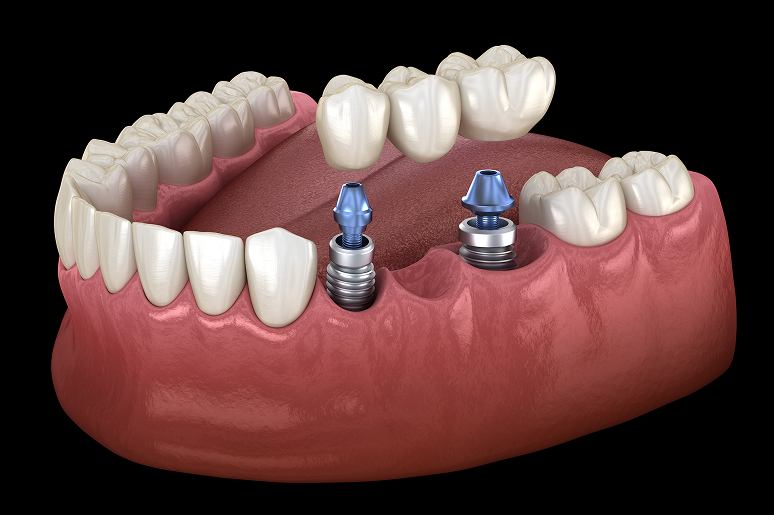
An implant bridge uses just two implants to anchor three or more teeth in a row. No healthy teeth are filed down, no removable hardware, and no gaps that compromise your bite. Just a fixed, seamless row of teeth.
Two roots. Three teeth. One fixed result.
An implant-supported bridge is anchored by two titanium implants — one at each end of the gap. A ceramic bridge spanning those posts fills in the missing teeth in between, creating a connected, permanent row.
Unlike a traditional tooth-supported bridge, no healthy neighboring teeth are touched. Unlike a partial denture, nothing comes out at night. The bridge is fixed, functional, and indistinguishable from natural teeth.
Better than a traditional bridge in every way.
Traditional bridges sacrifice two healthy teeth. An implant bridge sacrifices none — and it lasts far longer.
Healthy teeth stay healthy
Adjacent teeth are never filed or crowned. They retain their natural structure — and their strength — for the long term.
Bone preserved at both ends
The two implant posts stimulate the jawbone on either side of the gap, preventing the bone shrinkage that starts within months of losing a tooth.
Permanent, fixed comfort
The bridge doesn't come out. You chew, speak, and smile without worry — it's locked in place with the same stability as natural teeth.
Natural aesthetics
Our ceramic bridge is shade-matched to your existing teeth and crafted in-house for the most precise color and shape possible.
Cost-effective for multiple teeth
Replacing 3 teeth with 3 individual implants costs more than a bridge on 2. The bridge is often the most efficient solution when teeth are consecutive.
Long-lasting investment
With proper oral hygiene, implant-supported bridges routinely last 15–25+ years — far beyond the 10-year lifespan of a traditional bridge.
How it works
Consultation & planning
We assess your bone density, the gap dimensions, and adjacent teeth. Dr. Caputo presents a personalized plan with a clear timeline and cost breakdown — no obligation.
Implant placement & healing
Two titanium posts are placed at either end of the gap. Over 3–5 months, your bone fuses with the implants. A temporary restoration keeps you comfortable during this phase.
Bridge fabrication & delivery
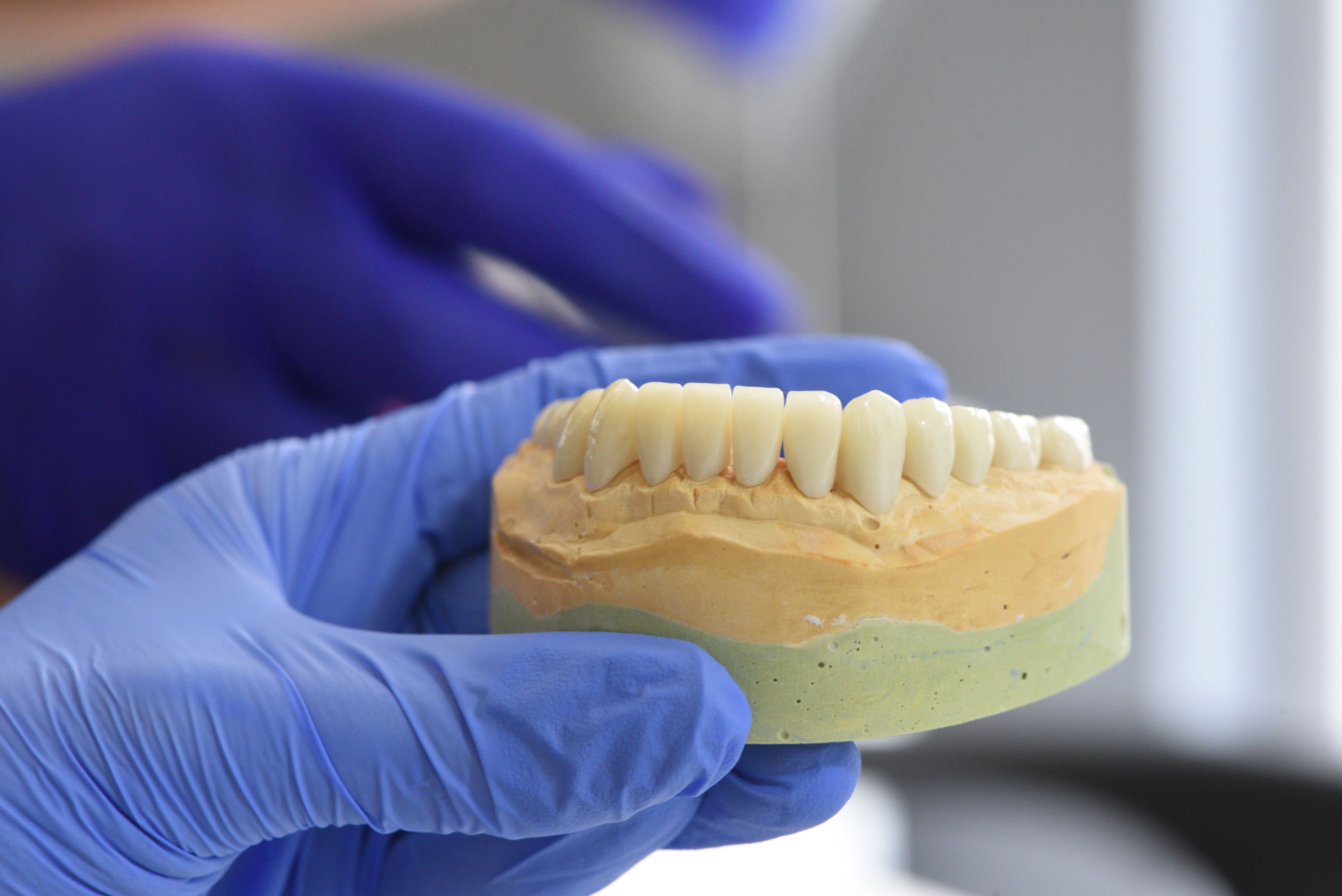
Once healing is confirmed, we take precise impressions. Our on-site lab fabricates your permanent ceramic bridge and we seat it in a single appointment. Done.
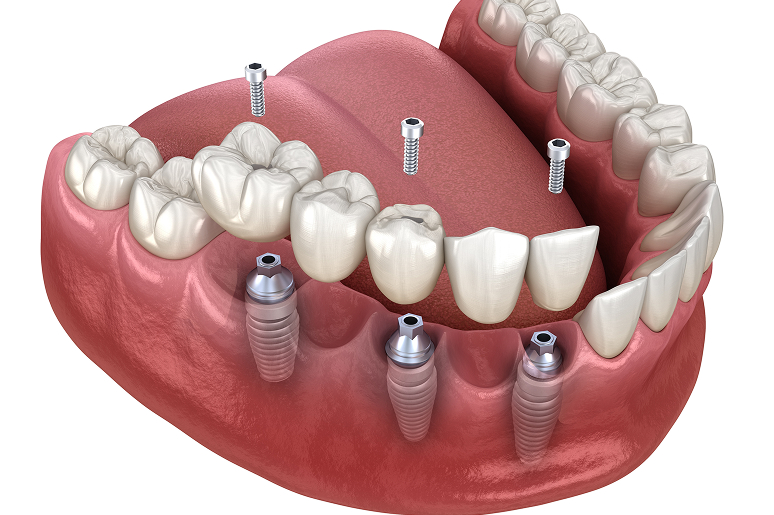
Ideal for anyone missing 2–5 consecutive teeth.
An implant bridge is the most efficient option when two or more adjacent teeth are missing and the surrounding bone and gum tissue is healthy. We evaluate:
If bone loss has occurred, we can often correct it with a bone graft performed right here — no outside referral needed.
Schedule ConsultationThe implant bridge looks better than my original teeth ever did. Nobody can tell — including me, half the time.
Common questions
How is an implant bridge different from a regular bridge?
A traditional bridge grinds down the healthy teeth on either side to use them as anchors. An implant bridge is anchored by titanium posts in the jawbone — no healthy teeth are touched. It also preserves more bone and typically lasts significantly longer.
How many teeth can an implant bridge replace?
Most implant bridges replace 3–4 consecutive teeth using 2 implants. In some cases, 5 teeth can be bridged with 2 implants, depending on bone density and bite forces. Dr. Caputo will assess your specific situation and recommend the right configuration.
What's the timeline from start to finish?
The full process typically takes 4–7 months: implant placement, a healing period of 3–5 months while bone fuses, then bridge fabrication and delivery (usually 2–3 appointments). You'll have a temporary restoration throughout so you're never without teeth.
Can I eat normally with an implant bridge?
Yes — once healed and fully seated, you can eat virtually anything. The bridge is anchored to bone, so it handles chewing forces the same way natural teeth do. There are no dietary restrictions beyond avoiding extremely hard objects that could chip any crown.
How do I clean under the bridge?
We'll show you how to use a floss threader or water flosser to clean underneath the bridge's pontic (false tooth section). It takes an extra minute in your routine but is straightforward once you've done it a few times. Regular cleanings here are also important.
Ready to close the gap — permanently?
No referral needed. The consultation is free. We'll tell you exactly what's possible and what it will cost.